For a while, VR and AR marketing had this strange disconnect between how it was presented and how it actually functioned once production started.
The public-facing version always sounded clean. Future of engagement. New era of storytelling. Digital and physical worlds blending together.
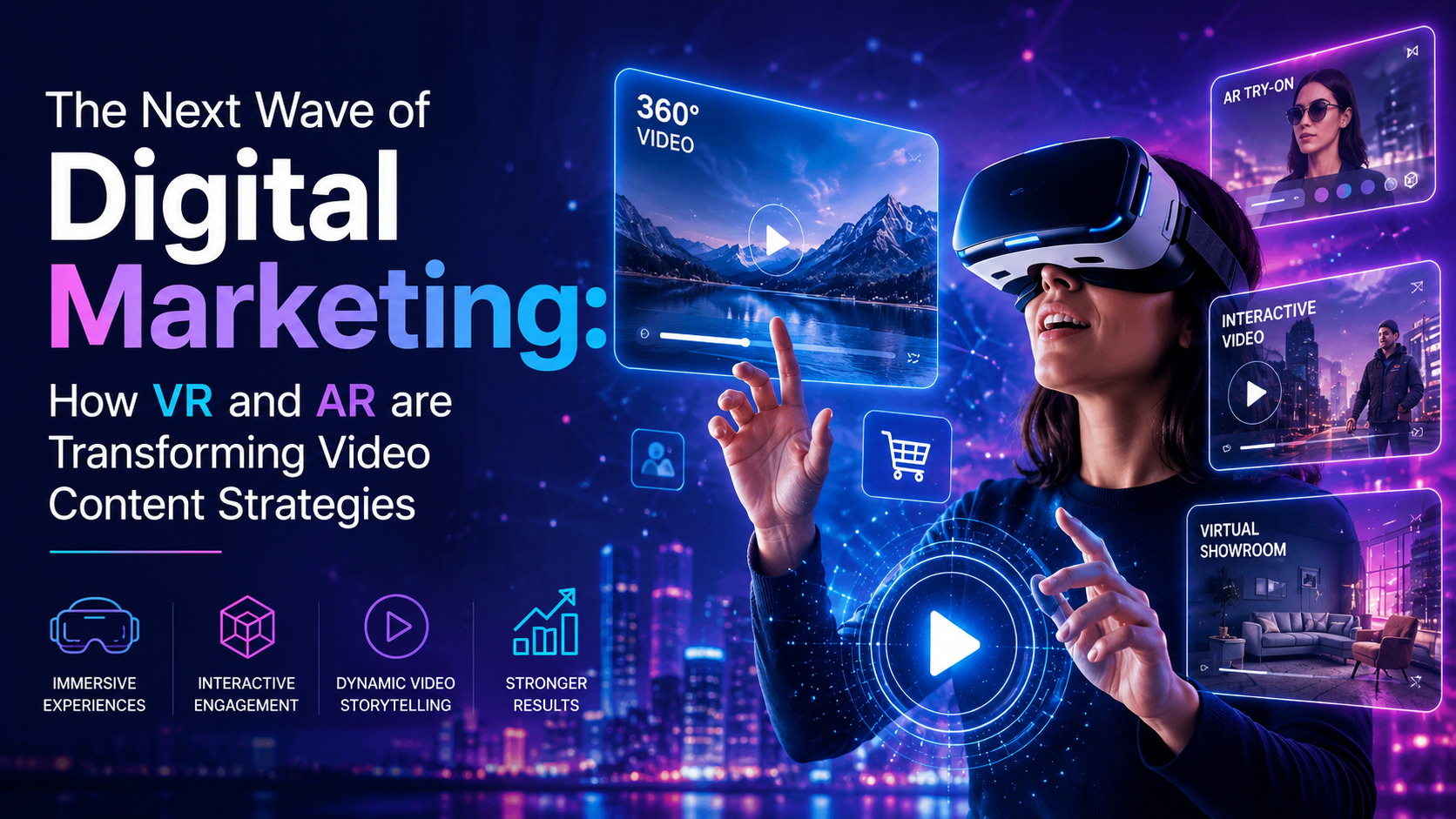
The Next Wave of Digital Marketing: How VR and AR are Transforming Video Content Strategies Share on X
Then the real project would begin and somebody would realize the interaction layer barely worked on older devices, or the client suddenly wanted the entire experience reformatted vertically after approvals were already done.
That gap always stood out to me.
A lot of immersive marketing discussions happened far above the operational level. The people talking most confidently about VR were often not the people dealing with timelines, revisions, device testing, rendering issues, retail launch pressure, or audiences dropping off because an interaction took too long to load.
The interesting part is that VR and AR did not really become mainstream through some dramatic moment anyway.
The behavior just slowly became normal.
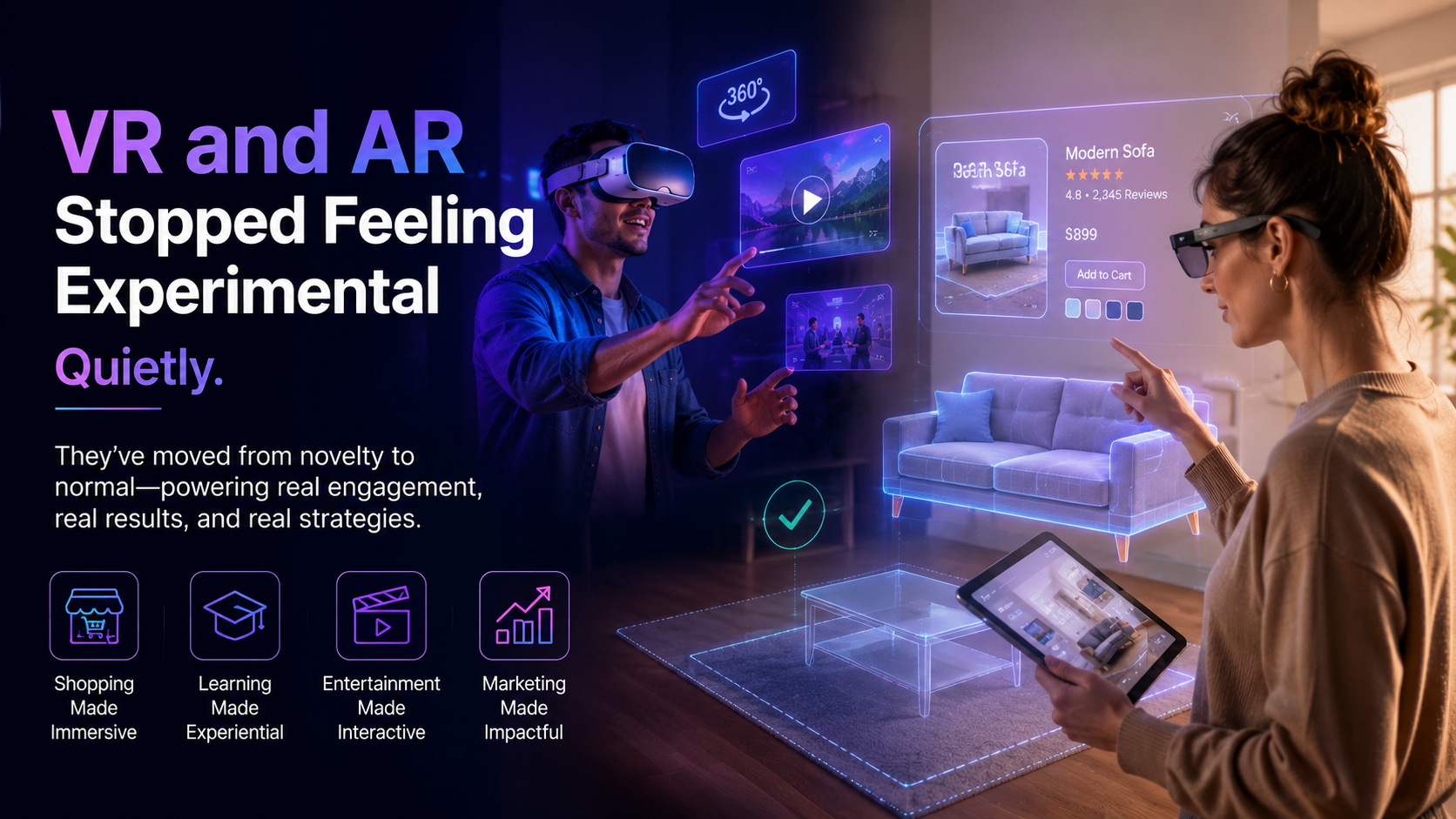
VR and AR Stopped Feeling Experimental Quietly
People stopped announcing they were using AR.
That was probably the real turning point.
Trying on glasses through a phone camera. Seeing whether furniture fits in a room. Scanning packaging for an interactive layer. Using face filters so often that nobody thinks twice about it anymore.
A few years ago, those experiences still carried novelty. Now they barely register consciously.
Brands took longer to catch up.
There was a stretch where immersive campaigns were treated almost like innovation theater. Something flashy enough to generate press coverage or make a company look ahead of the curve.
You still see some of that thinking floating around. Usually in projects where the technology itself gets more attention than the actual customer behavior underneath it.
But client conversations have changed quite a bit.
The better questions now are more practical.
Will people use this more than once?
Does it reduce hesitation before purchase?
Does it actually help someone understand the product faster?
And honestly, a lot of immersive experiences still struggle with those questions.
Most Brand Videos Still Treat Viewers Like Passive Observers
Traditional video production is built around controlled attention.
You decide the frame. You decide pacing. You guide the viewer exactly where you want them looking. Even the “natural” moments inside strong commercial work are usually extremely constructed underneath.
Interactive content disrupts that relationship immediately.
I remember sitting through a review where a client rotated away from the intended focal point during an AR walkthrough and accidentally landed on the weakest part of the environment first. The whole experience suddenly felt thinner than it did in the polished demo video.
Nothing was technically broken. The assumptions were.
A lot of immersive campaigns still rely on audiences behaving correctly. Looking where intended. Following prompts in sequence. Interacting the “right” way.
Real users rarely do that.
They skip instructions. Move too quickly. Ignore cues. Sometimes they accidentally discover the least interesting part of the experience first and never recover from it.
That changes how immersive content has to be designed.
Some projects still feel like linear commercials with interaction layered on top late in the process. Visually impressive. Nicely animated. But the interaction itself adds very little beyond novelty.
Audiences recognize that quickly now.
The novelty buffer is smaller than it used to be.
The Interesting Part Isn’t the Technology. It’s the Behavioral Shift.
The hardware discussion distracted the industry for too long.
The more important shift was behavioral.
People got used to manipulating media constantly. Filters, overlays, interactive shopping, virtual previews, swipe-based interfaces. Social platforms normalized those behaviors quietly over time.
And once audiences get comfortable interacting with content instead of simply watching it, expectations change a little.
Static content still works. Great storytelling still matters. Cinematic production still matters.
But audiences increasingly expect digital experiences to respond somehow. Even subtly.
That expectation creates an awkward middle ground for brands because not every campaign actually benefits from immersive features. Some companies still force AR into projects where it adds friction instead of value.
You can usually feel the difference between an immersive layer that solves a problem and one that exists because somebody internally wanted the campaign to sound innovative.
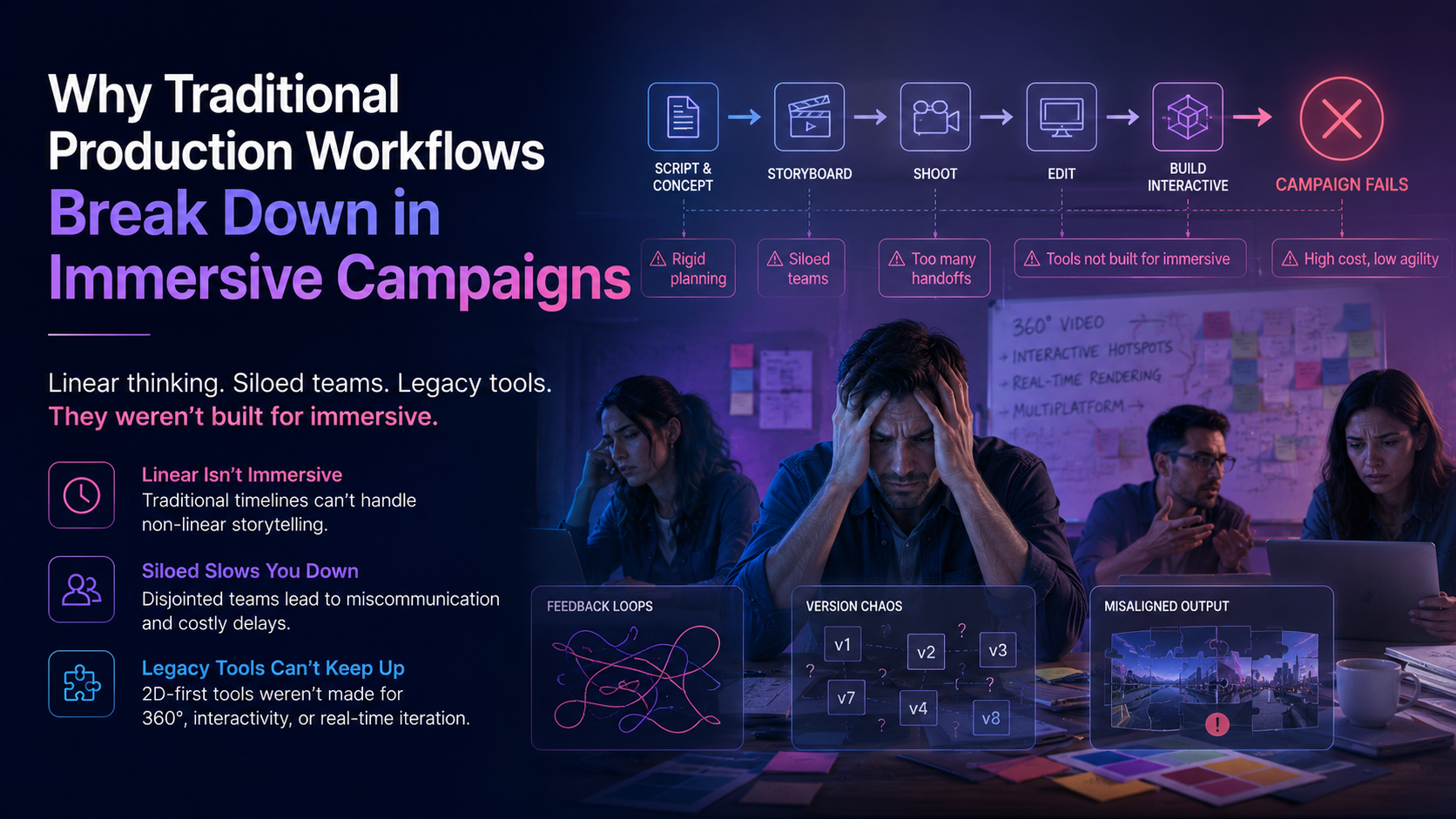
Why Traditional Production Workflows Break Down in Immersive Campaigns
Linear commercial production is surprisingly forgiving.
You can tighten pacing later. Restructure scenes. Rewrite VO. Change music and completely shift emotional tone during post-production.
Interactive work hardens much earlier.
A small usability issue can suddenly affect animation timing, interface behavior, spatial continuity, environmental logic, and development simultaneously. One revision starts touching multiple departments at once.
That operational complexity catches some clients off guard because immersive projects are often pitched visually first.
Then the revision process starts.
The Revision Process Gets Strange Fast
Traditional feedback sounds cinematic.
Can we shorten this section?
Can the ending feel bigger?
Can the pacing pick up earlier?
Immersive feedback becomes more behavioral.
“I didn’t know users could turn that direction.”
“I lost track of what the experience wanted me to focus on.”
“Feels polished, but I probably wouldn’t come back to it after the first try.”
That last comment matters more than teams sometimes want to admit.
A lot of immersive work demos beautifully in controlled walkthrough videos but feels surprisingly empty during actual use. Recorded demos hide friction very well because the person recording already understands the environment.
Real users expose the weaknesses immediately.
They hesitate longer than expected. Ignore instructions. Get distracted. Mobile users especially have very little patience for unclear interaction logic.
You cannot really control user behavior the same way you control a camera.
Short-Form Content Is Quietly Pulling VR and AR Into the Mainstream
The mainstream adoption path for immersive behavior probably came through phones more than headsets.
Most consumers are not spending hours inside elaborate VR environments. They are interacting with lightweight immersive layers casually throughout the day. A branded filter. A quick product preview. An AR shopping tool used for twenty seconds before checkout.
Small interactions repeated constantly.
That repetition matters.
And honestly, some of the strongest immersive campaigns right now are technically very simple. One useful interaction often outperforms giant feature-heavy environments that require too much attention from the user.
Consumers experience branded content under imperfect conditions anyway. Notifications firing. Weak connection. Half-paying attention while doing something else.
A lot of immersive concepts still get designed as though the user is sitting quietly with unlimited focus.
That is rarely reality.
The Brands Seeing Results Usually Start Smaller Than Expected
The strongest VR and AR ideas usually solve one practical problem.
Helping customers understand scale faster. Reducing uncertainty before purchase. Making the product feel more tangible without requiring a physical demo.
Simple utility consistently outperforms spectacle more often than brands expect.
Not always more exciting creatively. But effective.
A lot of immersive campaigns become weaker as more features get added because the technology itself starts driving decisions instead of actual user behavior.
More interaction is not automatically more value.
Creative Teams Are Having to Think More Like Product Designers
This shift changes collaboration structures quite a bit.
Editors start thinking about navigation. Designers start thinking about responsiveness. Developers influence storytelling decisions much earlier than they used to.
The old handoff structure becomes clumsy inside immersive work because interaction problems rarely stay isolated to one department.
A weak UX decision quickly becomes a creative issue.
A creative issue becomes a technical issue.
Then suddenly everyone is reopening conversations that supposedly got approved already.
The Bigger Shift May Be What Audiences Expect From Video Going Forward
I do not think every brand suddenly needs a massive VR strategy.
A lot of immersive marketing will continue to be overbuilt. Some experiences already feel outdated almost immediately after launch.
Still, audience expectations have shifted in ways that feel more durable than the trend cycle surrounding the technology itself.
People increasingly expect digital experiences to react. To adapt. To involve them somehow, even if the interaction is small.
That expectation probably stays.
The future of immersive marketing will likely look less like giant virtual worlds and more like smaller practical layers integrated into everyday behavior.
Less spectacle.
More usefulness.
That is usually where lasting behavior shifts happen anyway.
Recommended Read:
How to Hire a Digital Marketing Agency in 10 Steps
Maximizing Return on Investment (ROI): A Comprehensive Guide to Paid Social Media Advertising
Unlocking Hidden Insights: Using Data to Personalize the Customer Journey